The Truth About Boys in Dresses
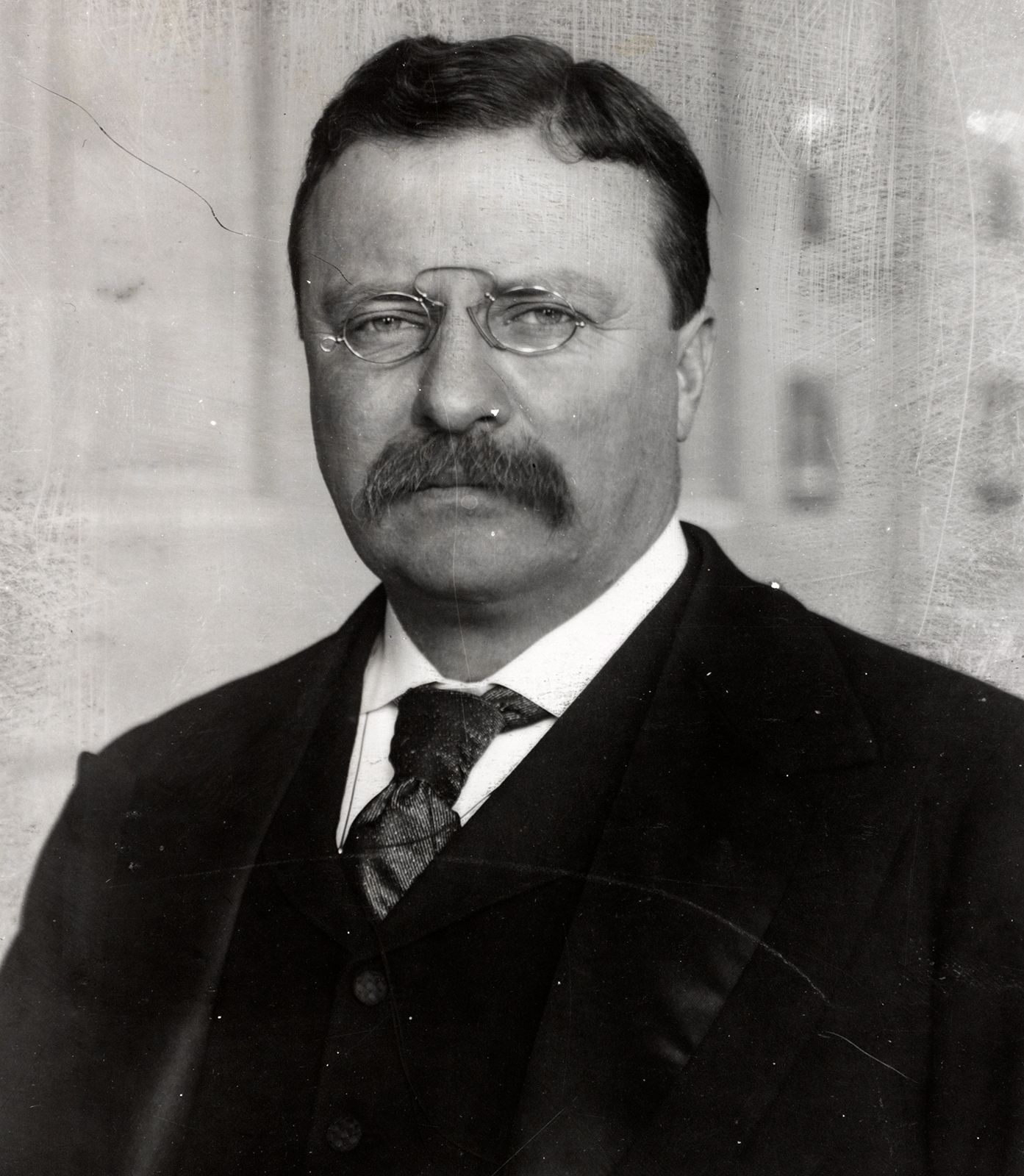
This is a photograph of Theodore "Teddy" Roosevelt, 26th president of the United States, Rough Rider, and paragon of early 20th-century masculinity. He's known for such quotes as "I'm as strong as a bull moose, and you can test me to the limit" and "Speak softly and carry a big stick."
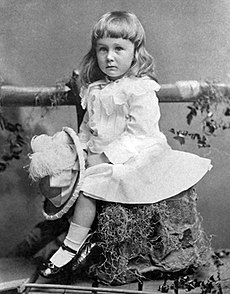
And this is also a photograph of Theodore Roosevelt, taken when he was a small child. Yes, really. These photographs are of the exact same person.
If this is weird to you, that's because you're used to a mindset about childrens' clothes that emerged around the 1950s and is still common today.
From the 17th through the early 20th centuries, every baby, regardless of gender, wore a dress. It was not considered emasculating or feminine; it was purely practical. It's easy to get to a diaper to change it when baby is wearing a garment that's completely open below the waist. Plain white, as modeled by young Teddy in the above photo, can be bleached, removing both stains and germs. (This is important because little kids are basically walking Petri dishes in terms of bacterial exposure.) And since the design was unisex, you could easily re-use the same little white dresses on all your children until they got too worn out to keep handing down. When your baby got old enough to start demanding more grown-up styles (usually between the ages of 4 and 7), you started dressing them like miniature versions of Mom and Dad.
So what happened? How did we suddenly go from a world where this was normal to a world where it wasn't?
To understand this, we need to look at the perfect storm of the 1950s. A lot of societal changes happened then that we're still dealing with the effects of. First of all, there was the beginning of the nuclear family.
Before the 1950s, it was not uncommon to live with grandparents, aunts and uncles, siblings and cousins, either under the same roof or at least on the same street. This is the extended family model, and it has deep roots. But in the late 1940s and early 1950s, housing was still fairly cheap (if you were white); WWII veterans were marrying and starting a baby "boom;" and as a result of all this, most young couples were taking out a mortgage on a small family home and starting their new families alone.
The 1950s also saw the continuation of a trend that had begun earlier in the century of small family sizes. Back when most Americans still lived on farms, it wasn't uncommon for families to have as many as a dozen children, especially since there was no guarantee those children would live to adulthood. But by the 1950s, there were new vaccines to protect children from such killers as measles, whooping cough, and polio. Plus, most (white) families lived in the suburbs now and didn't need a lot of little farmhands to keep things going. So you didn't have to have quite as many children as you used to, and the size of the average family was now a svelte 2.5 children.
When you don't have to clothe a dozen children, you can afford for each baby to have its own wardrobe (which you can later either hand down to a same-sex sibling or donate to the local Goodwill to feel good about your generosity). And herein lies the issue.
If you don't have to clothe a dozen babies in the exact same set of little white dresses and can afford to buy a separate wardrobe for each child, then you don't have to clothe those babies in identical clothing at all! You can, for instance, buy that fetching little sailor suit for your little boy and a sweet little polka-dotted dress for your little girl. That's right. The idea of very young boys and girls wearing gendered clothing is only about 75 years old.
There has been rebellion against the idea that toddler boys and toddler girls should have to dress differently. In the 1970s and 80s, unisex garments were again the norm, but this time they were baggy denim overalls and colorful T-shirts. Little girls' pants were cut the exact same as little boys' pants, only in different colors. There was a lot of red and yellow and green and brown, and less of the pink-and-blue color coding of the 50s and 60s. Unfortunately, by the 2000s, the pendulum had swung back the other way, and now children's clothing is about the most gendered it ever has been. Good luck finding a unisex baby onesie now!
Compounding this problem is the gender reveal. See, until ultrasound was invented in the 1970s, you had no way of knowing the sex of your baby until it was born. So to prepare for baby meant having unisex outfits, at least for the first few months. Once baby reached 3 months' size, this would change to the gendered outfits I mentioned before. While the invention of the ultrasound and the rise of the related prenatal checkups meant you could announce your baby's sex in a baby shower invitation, instead of having to wait until birth, the configuration of your child's genitals wasn't really a big deal to anybody.
And then in 2008, one woman got pregnant.
Jenna Myers Karvunidis had experienced multiple miscarriages before this pregnancy, all of which had taken place before she could even find out what the fetus's sex was. So in 2008, when she finally had a pregnancy progress to the point that she could see it on the ultrasound, the fact that she could know that she was carrying a girl was a big deal to her and her loved ones. And so, she held the first gender reveal party.
And then it went fucking viral. Now, gender reveal parties are a big business, and one that locks a child's destiny into narrow, gender-based boxes--"Guns or Glitter?" "Footballs or Fairy Wings?"--before the child is even born yet! Which, in turn, means that clothes for newborns are saccharine, ultra-gendered statements instead of just a simple onesie.
(To be clear, the reason I'm referring to a baby's sex, instead of the baby's "gender," is because a baby doesn't yet have a concept of gender identity, and even if it did, it couldn't tell us yet. A baby's sex is known. Its gender, for all intents and purposes, is..."baby.")

Pictured--the woman who invented the gender reveal party and honestly regrets it
So as you can see, what clothing is appropriate for a baby is dependent on arbitrarily-decided societal norms, not biology. Clothing, when you get right down to it, is just fabric. Fabric doesn't have genitals, and aside from the genitals, a baby boy and a baby girl are identical. So there is no biological law that says that little boys have to wear one thing and little girls another. Any baby can wear any baby clothes, as long as they fit, and strangers will be absolutely none the wiser.
The upshot of this is, if you see a little boy wearing a princess dress and twirling around:
- Mind your business. It's not your kid.
- The dress was probably the kid's idea. Children can and do beg their parents for things from princess dresses to candy bars to plush versions of their favorite cartoon characters. Some things are worth putting your foot down over, and some aren't.
- Seriously, is the color and cut of fabric on a child's body really the hill you want to die on?
- While we're at it, are you sure the child is a boy? Why? Because the kid has short hair? There are girls with short hair.
- If it is a boy, then just remember that he's wearing something that is historically accurate.
Boys in dresses do no more harm to the fabric of society than girls wearing pants, and girls have been wearing pants for a while.